Showing posts with label trees. Show all posts

Wednesday, June 19, 2013

Too-Mulch-Uous

I know I'm not rocking anyone's horticulture world by recounting the universally documented virtues of mulching, Still, it might bear repeating:

* You absolutely will have fewer weeds
* Watch your water bill drop because your plants and soil are losing less precious water
* Less soil compaction  from driving rains and perhaps foot traffic (from two and four-legged family members)
* Insulating soils from extremes in temperature fluctuation. That works both ways to benefit plants. Soil temperatures drop more slowly in the fall under mulched soils. Roots continue to develop while soil temperatures are above 40 degrees F. Durng the heat of summer plant roots benefit from cooler soil temperatures, too
* Mulches provide organic matter that improves soil structure. Mulch also increases microbial activity that converts organic matter into nutrients
* Research indicates pine fines or pine bark mulch actually have innate fungal-inhibiting properties that make them a smart choice to use for rhododendrons and azaleas

May I just get this one pet peeve off my chest? Why do some landscapers insist on building beaver dams of mulch? You've seen what I'm talking about. Unfortunately, it's an all too frequent occurrence. The mulch is mounded around the trunk at least a foot deep. Guys (women would never do this), root systems need oxygen- just like your lungs. Beaver dam mulching not only reduces oxygen to roots, it keeps bark tissue wet. Wet bark is subject to all kinds of issues. When bark tissue isn't healthy, that's stress. Plant stress often leads to insect and disease problems. Enough said?


We know it isn't difficult to mulch properly. Leave a two to four inch diameter opening of naked soil from the trunks of trees, or the outer edge of multi-stemmed shrubs. Spread mulch there, away from stems. In dense clay soils a one to two inch depth is fine. For sandy soils applying a three to four inch layer of mulch is appropriate. Extend the mulch as far as feasible within the context of your garden beds or lawn.

I heard a presentation a few years ago that I thought was interesting. Yes, you would probably be surprised at what I find interesting. Whenever possible, try to replicate what the plant would receive at its feet in nature. So, for trees and shrubs, consider using wood-barked based products that are broken down by fungi. For soft-stemmed annuals, perennials and veggies use "green" mulches that are dominated by bacteria- compost, leaf mulch, cotton burr compost, for example.


Don't get hung up on trying to match different mulches throughout your landscape. The most important thing is to mulch, rather than NOT.  Don't forget one last benefit of mulch- appearance, appearance, appearance. In addition to all the documented physical benefits mulch acts as a unifying element. It ties your plants together visually in a way that is very pleasing.

You don't know how lucky you are I didn't get started on white marble chip "mulch".  

Sunday, January 13, 2013

Going with the Grain


Tree ring print by Bryan Nash Gill
From Woodcut by Bryan Nash Gill
Published 2012 by Princeton Architectural Press
 
Everywhere you look, people are going with the grain -- wood grain, that is.

You'll find such patterns everywhere -- on fabrics, wall coverings, wedding and baby shower invitations, iPhone covers, lamp shades and even stitched onto pillows and leather wallets. The list is endless.

It's all part of a movement known as eco-chic -- bringing the outdoors in, whether it's in a rustic, retro or modern sophisticated way. BrandWave, which forecasts global design and branding trends, issued an alert on wood grain in November. And even Michael's, the arts and craft store, mentioned wood grain in its recent press release about 2013 trends.

I've always been a bit cynical about trends -- here today, gone tomorrow -- but I have to admit I have long been fascinated with wood grain. If every picture tells a story, then every piece of wood tells the history of the tree from which it came. Each image is as unique as a fingerprint.

Tree rings, for example, can indicate the amount of rain, the temperature, soil pH, nutrition and carbon dioxide concentration, to name only a few factors. There’s even a name for the study of tree-ring dating – dendrochronology – and a laboratory of tree-ring research at the University of Arizona. But that's the gardener in me talking.

Scientists, of course, aren’t the only ones concerned with wood grain. Artists and craftsmen have long used it in their work. My late father turned wood in his workshop on nights and weekends when I was growing up, making gavels, bowls and vases. Each was a delight to behold.

Perhaps the best (and strangest) merger of art and science came in 2011 when Bartholomaus Traubeck of Germany figured out a way to "play" wood cross sections on a record player. Check it out here. Sounds a bit chaotic, not unlike Nature itself. 

Me, I’ll stick with something a bit more traditional -- prints taken from tree cross sections.  An exhibit of 31 original prints by artist Bryan Nash Gill will open Saturday, Jan. 19 at the Chicago Botanic Garden and run through April 14.

Gill published a book of his prints, Woodcut, in April last year to a very favorable review in the New York Times. His work has been displayed worldwide, although this will be his first Midwest show.

Most of his prints are made using cross-sections of wood salvaged near his home in New Hartford, Connecticut. This exhibit, though, will include the print English Oak made from a tree at the Chicago Botanic Garden. The tree was one of a pair along a back road near the Dixon Prairie. It had to be removed when the two trees started to grow into each other, diminishing the health of both. (The remaining tree has since returned to full health.)

The exhibit will include three custom benches made from an ash tree at the Chicago Botanic Garden that was removed after being infected with Emerald Ash Borer. There also will be a video of Gill at work. He sands and burns the wood, then makes the print by carefully pressing paper down on the individual ridges. Each print is made by hand, so each is slightly different.
 
BCBG MaxAzria wood print dress
Of course, there's always the question of what to wear to such an event. I thought about wearing this. Or maybe a dress (left) worn by reality star Toya Wright at a birthday party last fall.

On second thought, maybe I'll just stick to  jeans and a plain sweater.

As someone who has added 12 trees over the past five years, I hope all this hoopla about wood grain will have a positive effect. May it inspire people to go out and plant a tree. Or at least go out and hug one.

By Karen Geisler

Friday, January 4, 2013

2013 Plants of the Year


**UPDATED**

The votes have been counted. The red carpet is ready. No, it’s not the Oscars, the Emmys or even the technical award for the most convincing use of groundcover in a science fiction movie.  No, this is much bigger – the 2013 Plants of the Year.
 
These are the best of the best. They're tough, reliable and easy to grow. You can keep your debutantes – those new plants introduced into polite gardening society this time every year. I’ll take those with a proven track record when deciding what to add to my garden this spring.
 
The 2013 honorees as selected by various organizations are listed below. Most of the plants -- especially the All-America Selections®  -- have flourished in various locations around the country.
 
Some, however, are more regional in nature. PlantSelect©, for example, focuses on the Rockies although many of its plants will do well in other areas as well. Live Oak (Quercus virginiana), chosen as the 2013 Urban Tree of the Year by the Society of Municipal Arborists, is only hardy in zones 7b-10.
 
And for those keeping score, this will be last rose of the year from the All-America Rose Selections™ as that group has disbanded.

This list is not all inclusive as some organizations will be announcing their winners before the gardening season begins in earnest. It will, however, provide some good candidates to consider in the coming months as you review what worked and what didn't in your garden during 2012.

So without further ado, the envelopes please....
 
 (A key to the various organizations and links to their Websites are at the bottom.)
 
Annuals
 
Canna 'South Pacific Scarlet'
Photo courtesy of All-America Selections®

Canna ‘South Pacific Scarlet’ (Canna generalis) – AAS Flower Award
Cheyenne Spirit Cone flower (Echinacea hybrida)-- AAS Flower Award
Geranium ‘Pinto™ Premium White to Rose’ – AAS Bedding Plant Award
Bubblegum Supertunia Vista (Petunia ‘Ustuni6001’) -- POM
Silver Shield plectranthus (Plectranthus argentatus ‘Silver Shield’) -- POM
Snow Princess sweet alyssum (Lobularia ‘Inlbusnopr’) – POM
 
Edibles

Melon 'Melemon'
'Melemon' Melon, 2013 AAS® Vegetable Award
Photo courtesy of All-America Selections®

Melon ‘Melemon’ F1 -- AAS Vegetable Award
Cherry Tomato ‘Jasper’ F1 -- AAS Vegetable Award
Watermelon ‘Harvest Moon’ F1 – AAS Vegetable Award


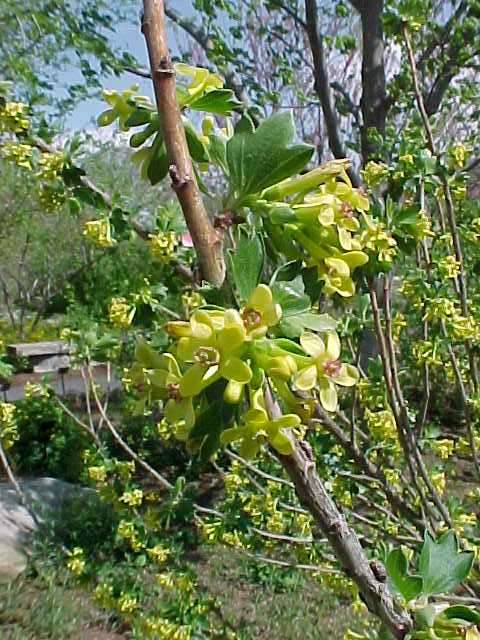
Clove currant flowers
Clove currant
Photo courtesy of Missouri Botanical Garden

Clove currant (Ribes odoratum) -- POM
Malabar spinach (Basella rubra ‘Red Stem’) – POM
Starkspur® Arkansas Black dwarf apple (Malus pumila ‘Lonacre’) – POM

 
Perennials
 
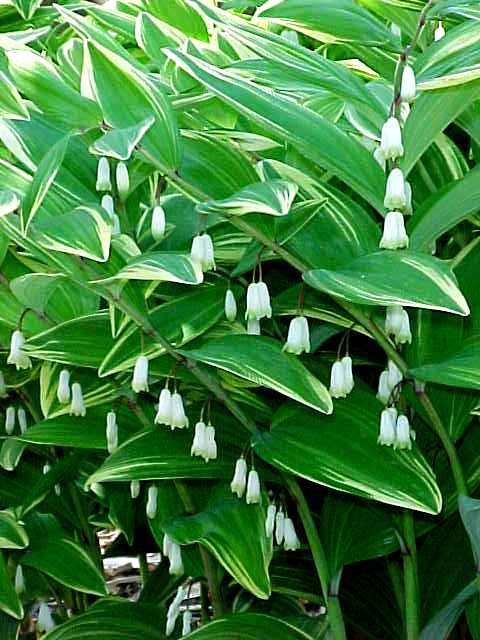
Variegated Solomon's Seal 2013 POY
Variegated Solomon's Seal
Photo from Missouri Botanical Garden
 
The Perennial Plant of the Year™ -- Variegated Solomon’s Seal (Polygonatum odoratum ‘Variegatum’) – PPA

Perennial of the Year -- Queen of the Prairie (Filipendula rubra ‘Venusta’) – GP

Chieftain Manzanita (Arctostaphylos x coloradensis ‘Chieftain’) – PS
Curly Leaf Sea Kale (Crambe maritima) – PS


Tennessee purple coneflower
Tennessee Purple Coneflower
Photo courtesy of Northscaping.com
Tennessee Purple Coneflower (Echinacea tennesseensis) – PS
Caramel Coral Bells (Heuchera ‘Caramel’) – POM
Narbonne Blue Flax (Linum narbonense) – PS

Turquoise Tails Blue Sedum (Sedum sediforme) – PS
 
Rainforest-Sunrise-hosta-of-the-year
Rainforest Sunrise, 2013 Hosta of the Year
Photo courtesy of AHGA member Made in the Shade Gardens
 
Hosta of the Year -- Rainforest Sunrise – AHGA
 
Grass of the Year – Blue Heaven™ Little Bluestem (Schizachyrium scoparium ‘MinnblueA’) – GP
Blue Zinger sedge (Carex glauca ‘Blue Zinger’) – POM
Palm sedge (Carex muskingumensis) – POM


Francis Meilland™ , 2013 AARS Rose of the Year
Photo from The Conard-Pyle Co.

Rose – Frances Meilland™  (Rosa 'Meitroni' PP#19970) by The Conard-Pyle Co. – All-America Rose Selections™. The first traditional hybrid tea rose to win under no-spray conditions. Also has won the ADR Award in Germany under no-spray tests.

Herb – Elderberry (Sambucus ssp.) – IHA


Shrubs and Vines


Redwing™ viburnum spring leaf color
Spring leaf color on Redwing™ viburnum
 
Mellow Yellow® spirea (Spiraea thunbergii ‘Ogon’) – POM
Doublefile viburnum (Viburnum plicatum var. tomentosum) -- POM
Redwing™ American Cranberrybush Viburnum (Viburnum trilobum ‘J.N. Select’) – GP 
Cross vine (Bignonia capreolata) -- POM

 
Trees


Royal Raindrops crabapple flowers
Flowers on Royal Raindrops™ crabapple
Photo courtesy Northscaping.com

Royal Raindrops™ crabapple (Malus ‘JFS-KW5’) – POM
Vanderwolf’s Pyramid limber pine (Pinus flexilis) – POM
Northern Pin Oak (Quercus ellipsoidalis) – GP
Chinese tree lilac (Syringa reticulata ssp. pekinensis) -- POM
Urban Tree of the Year – Live Oak (Quercus virginiana) – SMA
Conifer of the Year – Border Pine (Pinus strobiformis) – GP


**UPDATE 3/4/13**

If you're still searching for good plants, here are some additional winners that have been announced since this was originally published.

AAS has added two zinnias in its bedding plant category. They are Zinnia 'Profusion Double Deep Salmon' and Zinnia 'Profusion Double Hot Cherry.' Both get about 8-14" tall and are resistant to Alternaria and powdery mildew.

The Delaware Nursery and Landscape Association named Autumn Bride coral bells (Heuchera macrorhiza 'Autumn Bride) as its 2013 Herbaceous Plant and Gro-Low sumac (Rhus aromatica 'Gro-Low') as its 2013 Woody Plant.

The Elisabeth Carey Miller Botanical Garden in Seattle selected 29 plants for its 2013 Great Plant Picks list. Included are 13 different clematis, three geraniums and three salvias.

The Garden Club of America will honor the Eastern redbud (Cercis canadensis) with its Freeman Medal at the organization's centennial annual meeting May 2. An honorable metnion will go to Black gum (Nyssa sylvatica) while special recognition will go to Gopherwood (Torreya taxifolia).
 
 
AHGA = American Hosta Growers Association

GP = GreatPlants™ (Nebraska Arboretum and the Nebraska Nursery and Landscape Association). Hardy to zone 4.

IHA = International Herb Association

POM = Plants of Merit (Missouri Botanical Garden). Chosen for their outstanding quality and dependable performance for the lower Midwest -- Missouri, central and southern Illinois and the Kansas City metro area (Zones 5-6).

PS = PlantSelect© (Denver Botanic Gardens and the Colorado University Extension). Promotes the best plants for gardens from the intermountain region to the high plains.
 
SMA = Society of Municipal Arborists


By Karen Geisler

Sunday, September 16, 2012

My Big Miniature Elm

Yatsubusa Chinese elm in my garden
Yatsubusa Chinese elm
I’ve always wanted an elm tree, but somehow it has never worked out. Ditto for a bonsai. So what did I do last weekend? I bought a large version of a very popular elm used for bonsai –  Ulmus parvifolia Yatsubusa or the Yatsubusa Chinese elm.

It wasn't planned. At the time, I was looking for a Little Lime hydrangea to fill a spot recently vacated by some Queen Anne’s Lace. And, as long as I was at my favorite nursery, I decided to drift over to the sale area. After all, you never know what unusual bargains you might find this time of year.

Then I saw it, sitting by itself, almost overshadowed by some magnolias and dogwoods. It had tiny little leaves, barely more than three-quarters of an inch in length, with serrated edges and wonderfully corky bark.  This tree definitely needed some TLC. How could I resist? It practically whispered my name.

Or at least that’s what I told my husband when I got home. I had to admit that I didn’t have a clue as to where I was going to put it, nor if it would even look good with the mostly native flowers in my garden.


Bark Yatsubusa Chinese elm
A closeup of the bark
I guess I should have taken the Fifth. Or at least renewed my pledge to start a 12-step program for hortiholics.

Anyway, I think my husband was amused by my description of it as a big miniature elm. Guess it reminded him of the old George Carlin joke about JUMBO shrimp.

It was then and there that I decided to research my new tree. Almost every Website described its use only as a bonsai. Some said the Yatsubusha (which means "dwarf" in Japanese) is hardy to zone 6. A couple mentioned Zone 5, which I'm hoping is correct since that's where my garden is located.

Like most elms, it requires full sun. It's a slow grower -- supposedly 10’ tall and 6’ wide at maturity. One site estimated its height as 6’ after 10 years. Given that it apparently is about 4-5 years old at this point and 4 feet tall,  I probably won’t have to worry about its height anytime soon.

The perfect spot in my garden? It didn't exist. My only option was to extend an exising bed into an area of my yard that is mostly very heavy, very compacted clay. I've been avoiding this area for years.

But I was on a mission! I had to give an orphan tree a good home! So I spent much of this weekend on prep work. I dug up weeds. I stripped sod. I forked the soil. I mixed in cotton burr compost and composted manure.

At one point, I paused in the 80-degree weather and asked myself if this little elm was a "bargain" after all. But I shook it off, pruned off most of the bottom branches and planted it.

Yatsubusha Chinese elm
 
Of course, at this point, the tree looks like it could use some other plants around the bottom. I'm not sure exactly what to put there as the scale will have to be just right. Any suggestions?

Or maybe I should just hit some more sales?

Hmmm....If I do, this time I'll make sure I have a place to put something before I buy it.

By Karen Geisler

Thursday, April 12, 2012

Serviceberries? Yum!

Serviceberry in flower
The serviceberries are almost finished blooming in the Chicago area.


The amelanchier has more names than you can shake a stick at.  This small native tree/large shrub, often called a serviceberry, is also known as a juneberry, Saskatoon, shad blow, shad bush, sugarplum,  sarvisberry, chuckley pear or even currant-tree.

 I recently added another one – delicious.

While most people in recent years have focused on the tree’s ornamental qualities, its fruit increasingly is taking center stage. Amelanchier (pronounced am-el-LANG-kee-ur) is mentioned in the book “Edible Landscaping” by Rosalind Creasy as well as other similar books. It’s also being grown commercially in Canada’s Prairie provinces with great success.


Closeup of serviceberry flowers
Serviceberry flowers

The various amelanchier species do have nice white spring flowers, smooth gray bark and good fall color. Recent introductions have enhanced these traits, including Autumn Brilliance, which has great fall foliage.  Rainbow Pillar and Cumulus, two narrow upright versions, are great for smaller urban lots.

What most people don’t realize, though, is that the fruit is quite tasty and can be eaten straight off the tree. Many of the edible fruits from other trees and shrubs, like chokeberries (Aronia melanocarpa) or elderberries (Sambucus spp.), need to be cooked with some sugar.

Serviceberries technically aren’t even berries; they are actually "pomes" or a tiny apple of sorts. They also are good for you, with lots of antioxidents. Native Americans mixed them with dried meat and fat to make pemmican, which sustained them in the winter.

I recently stumbled across a website that sells jam, syrup and pie filling made in Canada from a specific kind of serviceberries known as Saskatoons (Amelanchier anifolia).  So I ordered some jam and decided to treat my co-workers at a breakfast meeting.


Empty jar serviceberry jam
Serviceberry jam
The tasting was a big hit!  They described the taste as similar to blueberries but with a twist. Some thought it has a slight almond taste, while others thought it was similar to that of blackberries, dark cherries or raisins. Needless to say, there wasn’t much jam left and my family quickly devoured that.

There are several efforts underway to promote these trees in the U.S. as a commercial crop or an addition to pick-your-own farms. These include Michigan's Saskatoon Project Midwest and a demonstration project by the Cornell University Cooperative Education Extension in upstate New York.

Both are focusing on Canadian varieties especially developed for their fruit: Regent, Smoky, Northline, Thiessen, Honeywood, Pembina, Martin and JB-30 (all Amelanchier anifolia).

Several of the more widely available serviceberries, including Regent (Amelanchier anifolia), and Cole Select, Autumn Brilliance and Princess Diana (all Amelanchier x grandiflora) are reportedly tasty. You also get the plant vigor usually associated with a hybrid form.

Meantime, I’m trying to figure out where I can put a few of these in my garden. Serviceberries, unlike blueberries, will grow in the alkaline soil common in the Chicago area and don’t require two different varieties to get a good crop.

They do, however, need full sun, good drainage, air circulation and watering during drought, especially while they are getting established. The fruit generally matures to a deep blue color here in early July, despite its "juneberry" nickname.

A serviceberry takes about three years before it starts producing a decent-sized crop. Given the wonderful taste and health benefits, though, I’m willing to wait. Now if I can only figure out a way to get the fruit before the birds do….

Serviceberry bush in bloom
A serviceberry in full bloom
By Karen Geisler

Tuesday, March 27, 2012

Spring-blooming trees

The flowers on an ornamental pear tree

Tulips, daffodils and other bulbs are all very nice when spring comes to town. To really make an impact, though, you need a flowering tree -- whether it's a magnolia, redbud, ornamental cherry, ornamental pear or crabapple.

I usually get a full month's worth of bloom out of these stalwarts in my garden. Not this year. Courtesy of the record-high temperatures, the magnolia has already finished its show in less than a week. My weeping ornamental cherry and ornamental pear are in full bloom while the redbud and crabapple are only a few days behind.

The cherry tree (prunus subhirtella var. pendula) is especially lovely this year. It has been through some exceptionally tough times --- drought the first year followed by cicadas and webworms. It generally hasn't produced a lot of flowers...that is, until this year. The mild winter has resulted in a veritable fountain of flowers that glow in the morning sun.


The flowers on a weeping ornamental cherry tree

Ornamental cherries should be in vogue this year, what with the 100th anniversary of Washington, D.C.'s  famous trees.  They can be a lovely focal point in the right spot. In the Chicago area, that may mean planting them in a location that's sheltered from the worst of the winter winds. They prefer full sun but will take part shade and they like their roots moist, but not wet.

There have been some promising new introductions in recent years  Among weeping cherries, there's Pink Snow Showers (prunus subhirtella 'Pisnshzam') and Weeping Extraordinaire (prunus serrulata 'Extrazam'). The latter, which has extra large double pink flowers, was among the plants featured in the "Sweet Melissa" fashion show at the National Green Centre in January.

In addition, there's the Royal Burgundy (prunus serrulata 'Royal Burgundy'), an upright ornamental cherry with reddish purple leaves and deeper pink flowers.

And, of course, you could always plant an Okame cherry, just like those around D.C.'s Tidal Basin. (Yes, they are hardy in Chicago.)


Ornamental pears

Ornamental pear trees (pyrus calleryana) are easy to spot in the landscape this time of year with their white flowers and "teardrop" shape. They often are mistaken for crabapples because the fruits, or "pomes," look a lot alike. The leaves of an ornamental pear are glossy, however, unlike those of a crabapple.

A  callery pear tree in my backyard

Many homeowners ask for a Bradford callery pear when they go shopping at a nursery. That particular variety, however, is no longer widely grown. Bradford, while beautiful, has been known to split because of the narrow angles where the branches divide from the trunk. Varieties that are now generally available include Aristocrat, Cleveland Select and Chanticleer, all of which are longer-lived and more stable.

Callery pears in general are fast growers and can top out at more than 30 feet when mature. They need full sun and will tolerate many different soils and pollution -- making them a good urban tree.

Redbuds

Eastern redbuds (cercis canadensis) are wonderful small trees with heart-shaped leaves and rosy violet flowers to die for.  Their branches have an interesting, almost zig-zag growth habit that provides winter interest.  

It's an "understory" tree, topping out at about 15 to 25 feet.  Redbuds will take part shade and are stunning in woodland or naturalized gardens. There are several cultivars available besides the straight species including Alba, a white version; Covey, a weeping variety; and Forest Pansy, which has purple leaves. Redbuds sometimes needs a more protected site in the Chicago area as they don't like windy, exposed sites. That's especially true for Forest Pansy.

Combining redbuds with ornamental pears can make a fantastic combination, as seen this past weekend at Millennium Park in downtown Chicago.

Redbuds and ornamental pears created this Impressionistic tableau
Sunday on the Chase Promenade in Chicago's Millennium Park.

Here's hoping that the cooler temperatures forecast for this coming week will keep these wonderful flowers on the trees longer than was possible with the magnolias. Their color and exuberance are inspiring!

By Karen Geisler

Friday, October 7, 2011

A Tough Nut to Crack

American Black Walnut
The American black walnut tree

For anyone with black walnut trees, fall can be summed up in three words – duck and cover.

Sit or stand below one of these trees and you can be bombarded. Sometimes by nuts randomly dropping off the tree, but more often by the squirrels. They nibble at the hulls surrounding the walnuts and then drop them as they skitter away, chattering all the while.

Actually, I think they save up their “leftovers” during the day to use when hapless victims pass underneath. At least it seemed that way when I had two black walnuts in my back yard and a third one that stretched over the fence from one of my neighbors.


Black walnuts
Black walnuts on the ground
We hadn’t realized that the mature trees in the back yard were black walnuts when we bought the property and built a deck. It took only one party before we threw in the towel on fall entertaining.

The back yard had been quiet all afternoon.When the guests arrived, though, the walnuts rained down on the only person wearing a very white shirt. As anyone who’s been hit by a walnut hull knows, the resulting brown stains don’t come out. Ever.

These black walnuts were majestic trees that must have been about 100 years old. They were late to leaf out in the spring, allowing plenty of time for bulbs to bloom and recharge. They provided great shade in the afternoon which helped keep the house cool.

I also felt somewhat of an obligation to keep them since they were among the last walnuts in theWalnut Grove Rearrangement. There were times when I thought about it, though, given all the problems growing plants under their canopy.

The American black walnut (juglans nigra) emits a chemical with a distinctive smell called juglone. It instantly kills roses and tomatoes. It's also toxic to horses and possibly dogs.

Not all plants die. Many just didn’t thrive. I found several lists of juglone-tolerant plants but ended up more confused than ever. Each list was different.

One list said peonies wouldn’t work but I had a lot of peonies at the base of my tallest walnut tree. In fact, they had grown under a chain link fence from my neighbor’s property. The old-fashioned version of Jacob’s ladder (polemonium) did well, as most lists suggested. A cultivar with variegated leaves died after a month.

My planting style became one of trial and error. I’d buy one plant. If it survived, I bought two more. I learned that wild flowers, leopard’s bane, spiderwort, hostas, astilbes and toad lilies were my friends. In fact, the older the variety and more vigorous it was, the better the plant seemed to do.


Black walnut tree leaves
Black walnut leaves
At times, it was hard to determine whether juglone or shade was the reason why a plant didn’t do well.

Don’t count on using your walnut crop as food unless you’re willing to do some major work. The hulls are so caustic that you need solvent-proof gloves to handle them. The shells are hard to crack. It's a lot easier to just buy walnuts at the grocery store.

Whatever you do, don’t call a tree service and ask them to cut down a walnut tree for free. Although walnut is an expensive wood, they will only laugh. They generally need an entire grove to make it worth their while and most urban trees aren't suitable.

Walnuts don’t reliably produce a crop until they are 30 to 50 years old, making them very big and very expensive to take down at that point. Also, some years the walnut crop is very light. We tried, but during the 15 years we lived there, we never were able to determine why some crops were heavier than others.

Even if you cut the tree down, juglone remains in the soil for a long, long time. One of my neighbors, a major rose fancier, unfortunately found this out after moving in and cutting down her walnut tree. All of her roses instantly bit the dust. Their replacements a few years later also died.

In my book, it’s definitely better to learn to live with walnuts. Focus on the other three seasons. Try wildflowers. Whatever you do, don’t give up. Black walnuts can be a tough nut to crack but you can still have a beautiful yard.
 
 
By Karen Geisler
Related Posts Plugin for WordPress, Blogger...

Share: