Showing posts with label roses. Show all posts

Thursday, April 4, 2013

A Visit with Knock Out Roses' William Radler

William Radler
William Radler in his living room
 
There was snow on the ground outside, but plenty of blooms inside the home of William Radler, developer of the popular Knock Out® shrub roses, when I visited recently.
Botanical drawings of roses lined the living room walls. A bouquet of silk roses sat on a table. There was a rose inlay on the wooden floor. And in the basement, the real deal – row after row of rose seedlings, many of them in full flower, under fluorescent lights.

This is the rosarium or “greenhouse” where Radler is developing his next generation of roses. Only the best will ever make it to market. Some may even be good enough to become Knock Out® roses, which are noted for their disease resistance.
More than 80 million Knock Out® roses have been sold since the first was introduced in 2000, making it the best selling rose series in the U.S. It’s also becoming more popular overseas, especially in Europe, Australia and Japan. Two of the seven varieties have been chosen as All America Rose Selections.

With such overwhelming success, you might expect that Radler, now 70, would be slowing down or at least would have moved his rose breeding operation to a larger, more high tech facility. If so, you’d be wrong on both counts.

Radler is planning to step up his rose introductions from one or two a year to as many as five. He especially wants to expand beyond the shrub and climbing roses in his portfolio.

The goal? “I want everything,” said Radler. He hopes to have so many rose varieties that it will require a separate catalog to list them all.
“Everybody hears about the Knock Outs®,” Radler said. “They don’t realize I have 27 roses in production. They might not all be Knock Outs® but most of them are low maintenance roses, the kind of roses people are looking to put in their gardens.”


Pink single rose with yellow eye
Brite Eyes, a Radler climbing rose
Photo courtesy of The Conard-Pyle Co./Star Roses and Plants

Eventually, he wants to produce low-maintenance hybrid teas, floribundas, miniatures and polyanthas. Radler’s particularly hot on miniature roses at this point.

“Everyone’s got a place for a miniature rose,” he said. “If they were black spot resistant, I think more people would plant them.”

The success of Knock Outs® has sparked its share of criticism in rose circles. Some rose fans feel that Knock Outs® are pushing other worthy rose varieties out of the market. Others complain that his most popular roses aren’t fragrant.
Radler countered that Knock Outs® are shrub roses, not exhibition roses which often require extensive spraying and care. People no longer have the time or inclination to fuss with roses in their garden, he said. Low-maintenance shrub roses like his often fit the bill.

He also noted fragrance is somewhat subjective, with some people able to detect a fragrance while someone else can not. Radler said the original Knock Out® has a fragrance and that Milwaukee’s Calatrava, a white shrub rose he developed, “can compete with any other rose on the market for fragrance.”
Shrub roses, he added, are not usually introduced for their fragrance.

“There’s all the David Austins, but they don’t make good shrub roses,” he said. “At the end of the season, they’re either the Eiffel Tower or they’re flopping all over the place.”


Radler with rose seedlings
In the basement with the latest crop of rose seedlings
Rose seedlings in bloom
Flowers galore
Radler has been hooked on roses ever since he bought his first one at age 9. He was winning prizes for his roses while still in college, perhaps one of the reasons why he switched to landscape architecture after only one semester as an art major. He has been breeding roses since the mid 1970s.

His growing set-up remains low tech: saw horses, 2x4s, shop lights and recycled Styrofoam slabs. Meticulous details about each seedling are kept on index cards off to one side.

At this stage, he cautioned, it’s not always possible to tell which roses will perform the best in the garden.

“The miniatures grow larger under the fluorescent lights than they do in the garden,” he said. “And the regular ones grow smaller under the lights than in the garden.”

Flower color also can be more intense outside than under the lights, he added.


Baby rose seedlings
Newborn rose seedlings under the lights

Not all of Radler’s crosses work of course. During a recent visit, he showed me a rose with buds that have never opened and a yellow rose with a green, grassy center.

On the other hand, there was a white rose with a fragrance to rival any at a high-end perfume counter. There also was one with a single layer of purple (yes, purple) petals held straight up at a 90 degree angle as well as several interesting color combinations.
These 500 seedlings will eventually be acclimated to sunlight and join the approximately 1,600 roses outside on his 2-acre lot. They won’t be coddled in any way, but assaulted with numerous enemies including overhead watering and black spot. Lackluster performers are culled. Those that flourish are sent off for six years of field trials and may eventually be marketed by The Conard-Pyle Co./Star Roses and Plants.


Yellow rose seedling
A very delicate bloom
 

Vermillion rose seedling
What would you call this color? Vermilion?

Apricot and yellow rose seedling
Loved the color combination on this seedling


This rose was especially fragrant


Pink striped rose seedling
Striped petals anyone?
Radler, a life-long Milwaukee resident, said he has no plans to move anywhere else. His first job after college was with the Milwaukee County parks department. He eventually went on to serve as garden director of the nearby Boerner Botanical Gardens from 1981 until his retirement in 1994.

“People who need to get away…I don’t understand that. I like to be in one place and have everything that I need in one location,” he said. “I could easily afford a place in Door County or a place in Palm Springs but that means I’m away from here.”

Success has resulted in some changes at the “headquarters” of Rose Innovations LLC, however. He used to do all the work himself but now has a staff of 8 people. He also has remodeled his house. One of those changes was to add a one-car garage because the original two-car garage is overflowing with garden supplies.


Radler's sunroom filled with plans
The sun room

Lest you think Radler is a plant snob, he does have many other plants besides roses. A two-story sun room holds everything from African violets and cactuses to lush tropicals. An extensive perennial garden in the front yard has every plant labeled with its common and botanical name.

He is introducing his second perennial this year, Amethyst Kiss™ spiderwort (Tradescantia ‘Radtrad’) which has larger flowers, larger flower clusters and flowers that are more blue that other varieties. He had previously introduced Sweet Thing™ verbena (Verbena ‘Radverb’).


Radler's snow-covered back yard
The back yard
One of his upcoming projects will be to put prairie grasses and plants on the tall berm just behind his property. It was formerly used by one of the Milwaukee's interurban railways but is now abandoned. He said the utility that owns the land has just given him permission for the project to go ahead.

Another, possibly even bigger project involves breeding tropical fish and gold fish. He has added several large tanks throughout his house over the past three years.
 
“My goal is to create tropical fish and goldfish that the world hasn’t seen before,” Radler said.

Does he have any names in mind for these new fish? Perhaps something like Knock Out, I asked?

He pondered the question for a minute and just smiled.

By Karen Geisler

Friday, January 4, 2013

2013 Plants of the Year


**UPDATED**

The votes have been counted. The red carpet is ready. No, it’s not the Oscars, the Emmys or even the technical award for the most convincing use of groundcover in a science fiction movie.  No, this is much bigger – the 2013 Plants of the Year.
 
These are the best of the best. They're tough, reliable and easy to grow. You can keep your debutantes – those new plants introduced into polite gardening society this time every year. I’ll take those with a proven track record when deciding what to add to my garden this spring.
 
The 2013 honorees as selected by various organizations are listed below. Most of the plants -- especially the All-America Selections®  -- have flourished in various locations around the country.
 
Some, however, are more regional in nature. PlantSelect©, for example, focuses on the Rockies although many of its plants will do well in other areas as well. Live Oak (Quercus virginiana), chosen as the 2013 Urban Tree of the Year by the Society of Municipal Arborists, is only hardy in zones 7b-10.
 
And for those keeping score, this will be last rose of the year from the All-America Rose Selections™ as that group has disbanded.

This list is not all inclusive as some organizations will be announcing their winners before the gardening season begins in earnest. It will, however, provide some good candidates to consider in the coming months as you review what worked and what didn't in your garden during 2012.

So without further ado, the envelopes please....
 
 (A key to the various organizations and links to their Websites are at the bottom.)
 
Annuals
 
Canna 'South Pacific Scarlet'
Photo courtesy of All-America Selections®

Canna ‘South Pacific Scarlet’ (Canna generalis) – AAS Flower Award
Cheyenne Spirit Cone flower (Echinacea hybrida)-- AAS Flower Award
Geranium ‘Pinto™ Premium White to Rose’ – AAS Bedding Plant Award
Bubblegum Supertunia Vista (Petunia ‘Ustuni6001’) -- POM
Silver Shield plectranthus (Plectranthus argentatus ‘Silver Shield’) -- POM
Snow Princess sweet alyssum (Lobularia ‘Inlbusnopr’) – POM
 
Edibles

Melon 'Melemon'
'Melemon' Melon, 2013 AAS® Vegetable Award
Photo courtesy of All-America Selections®

Melon ‘Melemon’ F1 -- AAS Vegetable Award
Cherry Tomato ‘Jasper’ F1 -- AAS Vegetable Award
Watermelon ‘Harvest Moon’ F1 – AAS Vegetable Award


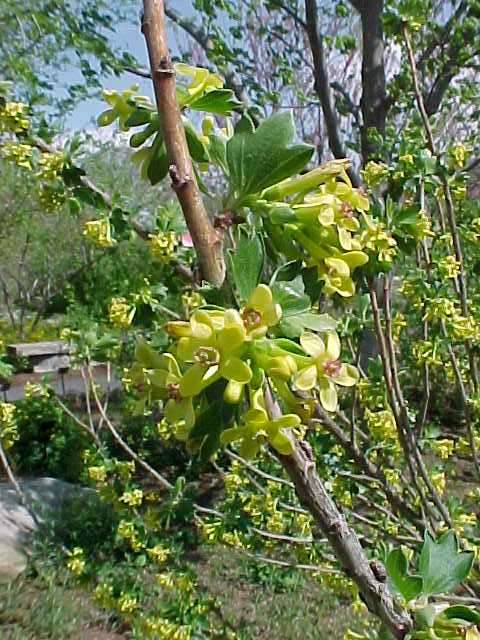
Clove currant flowers
Clove currant
Photo courtesy of Missouri Botanical Garden

Clove currant (Ribes odoratum) -- POM
Malabar spinach (Basella rubra ‘Red Stem’) – POM
Starkspur® Arkansas Black dwarf apple (Malus pumila ‘Lonacre’) – POM

 
Perennials
 
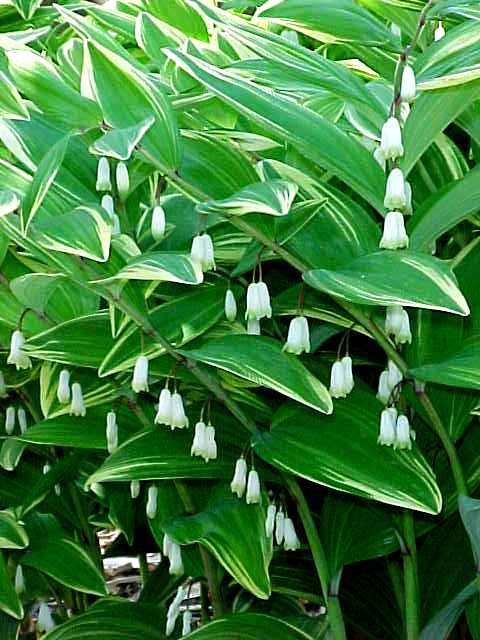
Variegated Solomon's Seal 2013 POY
Variegated Solomon's Seal
Photo from Missouri Botanical Garden
 
The Perennial Plant of the Year™ -- Variegated Solomon’s Seal (Polygonatum odoratum ‘Variegatum’) – PPA

Perennial of the Year -- Queen of the Prairie (Filipendula rubra ‘Venusta’) – GP

Chieftain Manzanita (Arctostaphylos x coloradensis ‘Chieftain’) – PS
Curly Leaf Sea Kale (Crambe maritima) – PS


Tennessee purple coneflower
Tennessee Purple Coneflower
Photo courtesy of Northscaping.com
Tennessee Purple Coneflower (Echinacea tennesseensis) – PS
Caramel Coral Bells (Heuchera ‘Caramel’) – POM
Narbonne Blue Flax (Linum narbonense) – PS

Turquoise Tails Blue Sedum (Sedum sediforme) – PS
 
Rainforest-Sunrise-hosta-of-the-year
Rainforest Sunrise, 2013 Hosta of the Year
Photo courtesy of AHGA member Made in the Shade Gardens
 
Hosta of the Year -- Rainforest Sunrise – AHGA
 
Grass of the Year – Blue Heaven™ Little Bluestem (Schizachyrium scoparium ‘MinnblueA’) – GP
Blue Zinger sedge (Carex glauca ‘Blue Zinger’) – POM
Palm sedge (Carex muskingumensis) – POM


Francis Meilland™ , 2013 AARS Rose of the Year
Photo from The Conard-Pyle Co.

Rose – Frances Meilland™  (Rosa 'Meitroni' PP#19970) by The Conard-Pyle Co. – All-America Rose Selections™. The first traditional hybrid tea rose to win under no-spray conditions. Also has won the ADR Award in Germany under no-spray tests.

Herb – Elderberry (Sambucus ssp.) – IHA


Shrubs and Vines


Redwing™ viburnum spring leaf color
Spring leaf color on Redwing™ viburnum
 
Mellow Yellow® spirea (Spiraea thunbergii ‘Ogon’) – POM
Doublefile viburnum (Viburnum plicatum var. tomentosum) -- POM
Redwing™ American Cranberrybush Viburnum (Viburnum trilobum ‘J.N. Select’) – GP 
Cross vine (Bignonia capreolata) -- POM

 
Trees


Royal Raindrops crabapple flowers
Flowers on Royal Raindrops™ crabapple
Photo courtesy Northscaping.com

Royal Raindrops™ crabapple (Malus ‘JFS-KW5’) – POM
Vanderwolf’s Pyramid limber pine (Pinus flexilis) – POM
Northern Pin Oak (Quercus ellipsoidalis) – GP
Chinese tree lilac (Syringa reticulata ssp. pekinensis) -- POM
Urban Tree of the Year – Live Oak (Quercus virginiana) – SMA
Conifer of the Year – Border Pine (Pinus strobiformis) – GP


**UPDATE 3/4/13**

If you're still searching for good plants, here are some additional winners that have been announced since this was originally published.

AAS has added two zinnias in its bedding plant category. They are Zinnia 'Profusion Double Deep Salmon' and Zinnia 'Profusion Double Hot Cherry.' Both get about 8-14" tall and are resistant to Alternaria and powdery mildew.

The Delaware Nursery and Landscape Association named Autumn Bride coral bells (Heuchera macrorhiza 'Autumn Bride) as its 2013 Herbaceous Plant and Gro-Low sumac (Rhus aromatica 'Gro-Low') as its 2013 Woody Plant.

The Elisabeth Carey Miller Botanical Garden in Seattle selected 29 plants for its 2013 Great Plant Picks list. Included are 13 different clematis, three geraniums and three salvias.

The Garden Club of America will honor the Eastern redbud (Cercis canadensis) with its Freeman Medal at the organization's centennial annual meeting May 2. An honorable metnion will go to Black gum (Nyssa sylvatica) while special recognition will go to Gopherwood (Torreya taxifolia).
 
 
AHGA = American Hosta Growers Association

GP = GreatPlants™ (Nebraska Arboretum and the Nebraska Nursery and Landscape Association). Hardy to zone 4.

IHA = International Herb Association

POM = Plants of Merit (Missouri Botanical Garden). Chosen for their outstanding quality and dependable performance for the lower Midwest -- Missouri, central and southern Illinois and the Kansas City metro area (Zones 5-6).

PS = PlantSelect© (Denver Botanic Gardens and the Colorado University Extension). Promotes the best plants for gardens from the intermountain region to the high plains.
 
SMA = Society of Municipal Arborists


By Karen Geisler

Tuesday, February 14, 2012

A Dozen Roses for Valentine's Day

Roses are red, violets are blue
Here are a dozen, especially for you

Happy Valentines's Day!


Falling in Love rose
Falling in Love
Photo courtesy of Weeks Roses
Angel Face rose
Angel Face
Photo courtesy of Weeks Roses
Brite Eyes rose
Brite Eyes
Photo courtesy of the Conard-Pyle Co./Star Roses

Kiss Me rose
Kiss Me
Photo courtesy of Bailey Nurseries
Easy Does It rose
Easy Does It
Photo courtesy of Weeks Roses
Sugar Moon rose
Sugar Moon
Photo courtesy of Weeks Roses


Nearly Wild rose
Nearly Wild
Photo courtesy of Weeks Roses
Perfume Delight rose
Perfume Delight
Photo courtesy of the Conard-Pyle Co./Star Roses


Double Knock Out rose
Double Knock Out
Photo courtesy of the Conard-Pyle Co./Star Roses
Moondance rose
Moondance
Photo courtesy of  the Conard-Pyle Co./Star Roses
Walking on Sunshine rose
Walking on Sunshine
Phot courtesy of the Conard-Pyle Co./Star Roses


Carefree Beauty rose
Carefree Beauty
Photo courtesy of Bailey Nurseries


By Karen Geisler

Friday, February 10, 2012

Tussie Mussies

A tussie mussie

You don't need flowery language to impress your sweetheart this Valentine's Day, especially if he or she is a gardener. And you don't necessarily need to bust the bank for a dozen long-stemmed roses either.

Take a cue from the Victorian era, when romance was in full bloom. Try a tussie mussie.

These small bouquets, usually made of fragrant flowers and herbs, have been around since medieval times. The spelling varies, with either a "y" or "ie" at the end, and they sometimes are called a nosegay or posy.

No one's quite sure where the name came from (although just pronouncing it makes me smile). One guess is that "tussie" comes from an Old English word for a knot of flowers. "Mussie" is thought to be a reference to the moss that probably was used to keep the flowers fresh.

Tussie mussies originally were used to keep the nose "gay" or happy at a time when the standards of public sanitation and private hygiene were much lower than today. Their fragrance protected the bearer from bad smells, which were thought to cause disease.

Then along came the Victorian era, which took tussie mussies to a whole new level. (Dim lights, play romantic music.) They used floriography -- the language of flowers -- to convey a secret message in their bouquets. The color of the rose you picked, for example, showed your true feelings.


A pink rose was for grace and beauty; yellow, friendship; white, innocence and purity; orange, enthusiasm or fascination; light peach, modesty; and purple, enchantment. A red rose? That was for romantic love, of course, a meaning that persists to this day.

Other flowers and their meanings include rosemary for remembrance; oregano, joy; sage, wisdom; purple heather, admiration and beauty; hydrangea, devotion; and baby's breath, everlasting love.

Traditionally, a tussie mussie had one main flower in the middle surrounded by filler plants and herbs, and came in a special metal bouquet holder. The concept has evolved over the years, though, and you can now find a large variety of shapes, sizes, styles and containers.

While most use fresh flowers that can be left to dry naturally, some incorporate silk flowers or dried materials. Ribbons, lace or even a vintage Valentine can be added, depending on what you think the object of your affection might appreciate.

So this Feb. 14, go for something a little out of the ordinary. Make your message more personal and interesting with a tussie mussie.

-- Chalet Nursery will have fresh tussie mussies available starting Saturday, Feb. 11 for a limited time. They are made by Kate Rice of Grayslake, IL.

By Karen Geisler
Related Posts Plugin for WordPress, Blogger...

Share: