

**UPDATED**
The votes have been counted. The red carpet is ready. No, it’s not the Oscars, the Emmys or even the technical award for the most convincing use of groundcover in a science fiction movie. No, this is much bigger – the 2013 Plants of the Year.
The votes have been counted. The red carpet is ready. No, it’s not the Oscars, the Emmys or even the technical award for the most convincing use of groundcover in a science fiction movie. No, this is much bigger – the 2013 Plants of the Year.
These are the best of the best. They're tough, reliable and easy to grow. You can keep your debutantes – those new plants introduced into
polite gardening society this time every year. I’ll take those with a
proven track record when deciding what to add to my garden this spring.
The 2013 honorees as selected by various organizations are
listed below. Most of the plants -- especially the All-America
Selections® -- have flourished in various locations around the country.
Some, however, are more regional in nature. PlantSelect©, for example, focuses on the Rockies although
many of its plants will do well in other areas as well. Live Oak (Quercus virginiana), chosen as the 2013
Urban Tree of the Year by the Society of Municipal Arborists, is only hardy in
zones 7b-10.
And for those keeping score, this will be last rose of the year from the All-America Rose Selections™ as that group has disbanded.
This list is not all inclusive as some organizations will be announcing their winners before the gardening season begins in earnest. It will, however, provide some good candidates to consider in the coming months as you review what worked and what didn't in your garden during 2012.
So without further ado, the envelopes please....
Annuals
 |
| Canna 'South Pacific Scarlet' Photo courtesy of All-America Selections® |
Canna ‘South Pacific Scarlet’ (Canna generalis) – AAS Flower Award
Cheyenne Spirit Cone flower (Echinacea hybrida)-- AAS Flower Award
Geranium ‘Pinto™ Premium White to Rose’ – AAS Bedding Plant Award
Bubblegum Supertunia Vista (Petunia ‘Ustuni6001’) -- POM
Silver Shield plectranthus (Plectranthus argentatus ‘Silver Shield’) -- POM
Snow Princess sweet alyssum (Lobularia ‘Inlbusnopr’) – POM
Edibles
Chieftain Manzanita (Arctostaphylos x coloradensis ‘Chieftain’) – PS
Curly Leaf Sea Kale (Crambe maritima) – PS
Narbonne Blue Flax (Linum narbonense) – PS
Turquoise Tails Blue Sedum (Sedum sediforme) – PS
Rose – Frances Meilland™ (Rosa 'Meitroni' PP#19970) by The Conard-Pyle Co. – All-America Rose Selections™. The first traditional hybrid tea rose to win under no-spray conditions. Also has won the ADR Award in Germany under no-spray tests.
Herb – Elderberry (Sambucus ssp.) – IHA
PS = PlantSelect© (Denver Botanic Gardens and the Colorado University Extension). Promotes the best plants for gardens from the intermountain region to the high plains.
 |
| 'Melemon' Melon, 2013 AAS® Vegetable Award Photo courtesy of All-America Selections® |
Melon ‘Melemon’ F1 -- AAS Vegetable Award
Cherry Tomato ‘Jasper’ F1 -- AAS Vegetable Award
Watermelon ‘Harvest Moon’ F1 – AAS Vegetable Award
Cherry Tomato ‘Jasper’ F1 -- AAS Vegetable Award
Watermelon ‘Harvest Moon’ F1 – AAS Vegetable Award
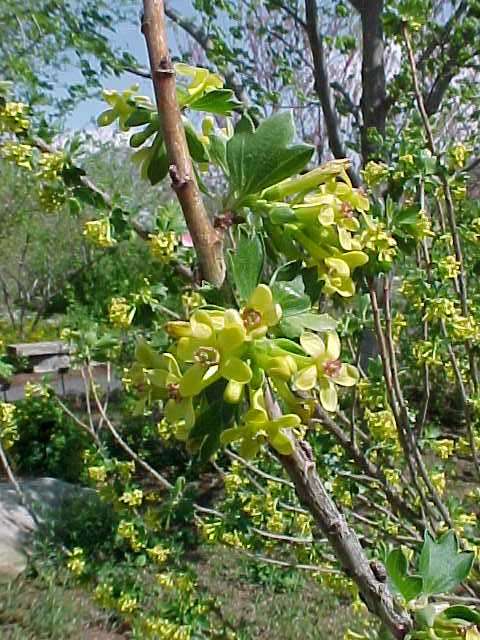 |
| Clove currant Photo courtesy of Missouri Botanical Garden |
Clove currant (Ribes odoratum) -- POM
Malabar spinach (Basella
rubra ‘Red Stem’) – POM
Starkspur® Arkansas Black dwarf apple (Malus pumila ‘Lonacre’) – POM
Perennials
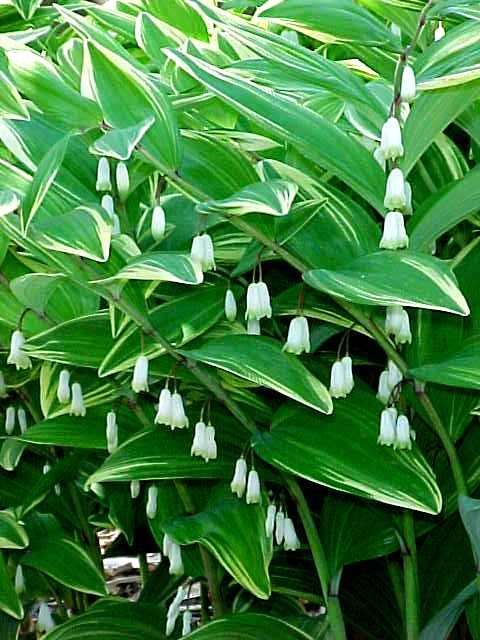 |
| Variegated Solomon's Seal Photo from Missouri Botanical Garden |
The Perennial Plant of the Year™ -- Variegated Solomon’s Seal (Polygonatum odoratum ‘Variegatum’) – PPA
Perennial of the Year -- Queen of the Prairie (Filipendula rubra ‘Venusta’) – GP
Perennial of the Year -- Queen of the Prairie (Filipendula rubra ‘Venusta’) – GP
Chieftain Manzanita (Arctostaphylos x coloradensis ‘Chieftain’) – PS
Curly Leaf Sea Kale (Crambe maritima) – PS
 |
| Tennessee Purple Coneflower Photo courtesy of Northscaping.com |
Tennessee Purple Coneflower (Echinacea tennesseensis) – PS
Caramel Coral Bells (Heuchera ‘Caramel’) – POMNarbonne Blue Flax (Linum narbonense) – PS
Turquoise Tails Blue Sedum (Sedum sediforme) – PS
 |
| Rainforest Sunrise, 2013 Hosta of the Year Photo courtesy of AHGA member Made in the Shade Gardens |
Hosta of the Year -- Rainforest Sunrise – AHGA
Grass of the Year – Blue Heaven™ Little Bluestem (Schizachyrium scoparium ‘MinnblueA’) –
GP
Blue Zinger sedge (Carex glauca ‘Blue Zinger’) – POM
Palm sedge (Carex muskingumensis) – POM
 |
| Francis Meilland™ , 2013 AARS Rose of the Year Photo from The Conard-Pyle Co. |
Rose – Frances Meilland™ (Rosa 'Meitroni' PP#19970) by The Conard-Pyle Co. – All-America Rose Selections™. The first traditional hybrid tea rose to win under no-spray conditions. Also has won the ADR Award in Germany under no-spray tests.
Herb – Elderberry (Sambucus ssp.) – IHA
Shrubs and Vines
 |
| Spring leaf color on Redwing™ viburnum |
Mellow Yellow® spirea (Spiraea thunbergii ‘Ogon’) –
POM
Doublefile viburnum (Viburnum
plicatum var. tomentosum) -- POM
Redwing™ American Cranberrybush Viburnum (Viburnum trilobum ‘J.N. Select’) – GP
Cross vine (Bignonia capreolata) -- POM
Trees
 |
| Flowers on Royal Raindrops™ crabapple Photo courtesy Northscaping.com |
Royal Raindrops™ crabapple (Malus ‘JFS-KW5’) – POM
Vanderwolf’s Pyramid limber pine (Pinus flexilis) – POM
Northern Pin Oak (Quercus
ellipsoidalis) – GP
Chinese tree lilac (Syringa
reticulata ssp. pekinensis) -- POM
Urban Tree of the
Year – Live Oak (Quercus virginiana)
– SMA
Conifer of the Year
– Border Pine (Pinus strobiformis) –
GP
If you're still searching for good plants, here are some additional winners that have been announced since this was originally published.
AAS has added two zinnias in its bedding plant category. They are Zinnia 'Profusion Double Deep Salmon' and Zinnia 'Profusion Double Hot Cherry.' Both get about 8-14" tall and are resistant to Alternaria and powdery mildew.
The Delaware Nursery and Landscape Association named Autumn Bride coral bells (Heuchera macrorhiza 'Autumn Bride) as its 2013 Herbaceous Plant and Gro-Low sumac (Rhus aromatica 'Gro-Low') as its 2013 Woody Plant.
The Elisabeth Carey Miller Botanical Garden in Seattle selected 29 plants for its 2013 Great Plant Picks list. Included are 13 different clematis, three geraniums and three salvias.
The Garden Club of America will honor the Eastern redbud (Cercis canadensis) with its Freeman Medal at the organization's centennial annual meeting May 2. An honorable metnion will go to Black gum (Nyssa sylvatica) while special recognition will go to Gopherwood (Torreya taxifolia).
**UPDATE 3/4/13**
If you're still searching for good plants, here are some additional winners that have been announced since this was originally published.
AAS has added two zinnias in its bedding plant category. They are Zinnia 'Profusion Double Deep Salmon' and Zinnia 'Profusion Double Hot Cherry.' Both get about 8-14" tall and are resistant to Alternaria and powdery mildew.
The Delaware Nursery and Landscape Association named Autumn Bride coral bells (Heuchera macrorhiza 'Autumn Bride) as its 2013 Herbaceous Plant and Gro-Low sumac (Rhus aromatica 'Gro-Low') as its 2013 Woody Plant.
The Elisabeth Carey Miller Botanical Garden in Seattle selected 29 plants for its 2013 Great Plant Picks list. Included are 13 different clematis, three geraniums and three salvias.
The Garden Club of America will honor the Eastern redbud (Cercis canadensis) with its Freeman Medal at the organization's centennial annual meeting May 2. An honorable metnion will go to Black gum (Nyssa sylvatica) while special recognition will go to Gopherwood (Torreya taxifolia).
AAS = All-America Selections™
AHGA = American Hosta Growers Association
GP = GreatPlants™ (Nebraska Arboretum and the Nebraska Nursery and Landscape Association). Hardy to zone 4.
IHA = International Herb Association
POM = Plants of Merit (Missouri Botanical Garden). Chosen for their outstanding quality and dependable performance for the lower Midwest -- Missouri, central and southern Illinois and the Kansas City metro area (Zones 5-6).
PS = PlantSelect© (Denver Botanic Gardens and the Colorado University Extension). Promotes the best plants for gardens from the intermountain region to the high plains.


